Sunday, June 1, 2014

A Small Ray of Light


I had been in California for five months, and in Seaside, a town situated between Monterey and Fort Ord (long since closed), for about a month.  The work was slow, and my companion repeatedly led both of us to break some mission rules.  I was in crisis and I called out to God for help.  One night I prayed to know if the church was true and received an answer.  I have written about that night previously here:

A Witness from the Spirit

When I prayed, I did not receive an immediate answer, and I at first took this to mean that perhaps the church was not true.  This led to great despair; "Why couldn't it be true?" I asked.  But then I said, "No, you know that it is true."  Finally, I was prompted to ask again, and when I did I had a feeling of peace.  I likened that feeling to a match being lit in a dark room, but I could well have likened it to a small ray of light.

When we are feeling sorrow, we might feel that we are in darkness, and when our anguish is replaced by peace, we might feel that there is a new light falling upon us.  A simple little ray of light can go a long way.  As Alma the Younger taught his son Helaman, "by small and simple things are great things brought to pass" (Alma 37:6).

There are many things that we could do as individuals that could make a great difference to others.  As President Thomas S. Monson has taught, "The needs of others are ever present, and each of us can do something to help someone."  Even so, we might not always know what it is that we can do to help.

Perhaps we think that a great effort will be required when, in fact, something small and very simple could make all the difference.  Do we realize how simple it is to smile, to greet people in a friendly manner, to wave? Yet by such simple actions we can raise spirits and build friendships.  What simpler ray of light can there be than a smile?


A friend wrote in my high school yearbook that "Every time I was down you were there with a smile on your face. You’ll never know how much I appreciated you."  Years later I heard that this friend was going through a hard time; I wondered what I could do to help, and I realized that I already had the answer.  The next time I saw this friend, I gave them a smile, a small ray of light.

A smile can let people know that they are not alone, it is a simple way to say


Several years ago, when my mother passed away, I was impressed by those who came to either the viewing or to the funeral, folks who did not know my mother, but who did know a member of my family.  It is not necessary to have known the deceased in order to attend a funeral or go to a viewing, it is only necessary to know someone who is grieving.  It is a simple thing to go and give them support.

One thing we could ask is, "What would Tommy Monson do?"  The life of our prophet, President Monson, presents countless examples of things we can do to give others a small ray of light through small acts of service.

When we know how simple it can be to help others, would any of us withhold that small ray of light?  If we know that a smile could lift a spirit, would we refuse to smile?  Would we give a stone instead of bread, a serpent instead of fish (see Matthew 7:9-10)?

Is there anyone from whom we are withholding the light that we could give?  Should we not, even now, start giving that light?


Tuesday, May 13, 2014

Action This Day


During the Second World War, Sir Wintson Churchill, the prime minster of Great Britain, would label memos and other papers with the words "Action this day," to indicate the urgency of certain actions and when they should be performed.  The phrase can be a reminder to us to not put off to tomorrow those things that should be done today.  Some actions may need to be performed daily until a goal or dream is achieved.

In mid-December 1988, near the end of my first year in the mission field, I hit a rather rough patch.  As December began, there were clear signals that the work was going to drop off because of the upcoming holiday season.  I went ten days without writing in my journal, and when I finally did, the only thing I noted about the work was that the previous week we had had ten appointments set, and that all ten had fallen through.

As the work fell off, I became discouraged, and succumbed to temptation.  I have always liked the way Nephi put it, "Tempations which so easily beset me."  It doesn't really matter what the tempation is, and what it is is nobody's business but the individual who is struggling with it.

In any case, after succumbing to this temptation which so easily beset me, I found myself yelling at the image in the mirror.  I mean, I really laid into myself.  The good Elder Cox was fed up with the bad Elder Cox.

I remembered all that I had learned on my mission and realized that I had not done a very good job of applying those lessons.  I said that I was tired of the things I was doing to myself.  I said that I was tired of my weak and inferior attitude.

All in all, I came to the realization that it was time to get control of my life.  I needed to do some evaluating and set some serious goals and exercise some serious faith.  The next morning I started reading Drawing on the Powers of Heaven by Grant Von Harrison, for the second time.  The mind can overcome the physical and the time had come to turn my life around.  I had every intention of doing that.


The following day I fasted, and it gave me a lot of strength.  That evening I wrote in my journal that:

I have come up with some goals that I think are good:
  1. Coming closer to and developing a personal relationship with my Heavenly Father and with Jesus Christ. This has been a goal I have had for most of my mission and now I reaffirm it. Plan of Action: Prayer, scripture study, monthly fasting, hard work, obedience to the mission rules and the commandments, and kindness and love to others.
  2. Overcoming shortcomings in communication and conversation. Another long time goal. Plan of Action: Take advantage of opportunities to communicate.
  3. Keeping and improving the knowledge and attitude that I am loved and needed and that I am not unique because of my challenges. Plan of Action: Reminding myself of evidences of my family’s and friend’s love and need for me. Remembering the stake missionary in Seaside and his postive attitude in the face of his challenges.
  4. Improving my words and actions so that they may portray the love and need I have for those who are close and also to investigators and contacts. Plan of Action: Practicing and doing acts of kindness and charity. Putting myself last on the list. Remembering and looking for others’ needs and challenges.
  5. Overcoming my tendency to get angry during rough times. Plan of Action: To strive always to be humble before the Lord. When the trial comes, to look to Him with a prayerful heart rather than raising my voice in anger towards Him. To learn and exercise patience at all times. Reminding myself daily of his love for me and of the evidences thereof.
  6. Continue to put the bad things in my past behind me as well as to overcome attitudes of inferiority. Plan of Action: Always concentrate on good things in past, present and future. Remind myself of the good that has been spoken of me (without letting it go to my head, of course). Remind myself of friends who do indeed care. Remind myself that “all things are possible to them that believe.” Remind myself that everyone has challenges.
  7. Restore to myself the need to get out and go to work that I had in my first area. Plan of Action: Hard work, obedience, prayer and fasting, and scripture study.
  8. The all encompassing goal of becoming the best Elder Douglas Paul Cox ever to serve in the California San Jose mission. Becoming the best missionary that I can be and making happy memories. Plan of Action: Work on goals 1-7, obedience, hard work, love and meekness, prayer and fasting, scripture study, practice and learn and use missionary skills.
These are my present goals with their plans of action. I know that if I exercise faith and pray and fast as I work on these goals, they will be accomplished.

What struck me as I read all these years later the goals as recorded in my journal, is how much I have changed.  I don't say this to brag.  Rather, I can say that as I followed through on the plans of action to reach these goals, not just on my mission, but in the years since, that I was able to find some success.  Setting goals can work; the Atonement really can change lives; and the grace of Christ really is sufficient to make weak things become strong.


Sunday, May 11, 2014

The Second Baptism


I wrote back in January the story of the first baptism of my mission (see:  http://thewholemissionary.blogspot.com/2014/01/the-first-baptism.html).

The day after we baptized Trudy, we door tracted into Elizabeth.  Sometimes it can be a good idea to slow down in missionary work.  Had my Elder Friend (yes, that really was his name) and I been in too much of a hurry on this day, we would have missed finding this lady who would become the second person I participated in teaching who was subsquently baptized.  It is not always necessary to hurry to the next door; don't dawdle, but don't be in such a hurry that you miss a blessing.

We knocked on this door with a no soliciting sign.  Typically we did not knock on doors with such signs, but we did knock on this one -- stay in tune with the spirit so you catch the prompting to break the routine.  We waited about a minute but no one answered.  So we started off toward the next house, which was across the street on the next corner.  I lagged behind a bit to close the gate to this house’s yard.

As I turned to follow my companion, I happened to look back at the front door of this house, and in that moment I saw that someone had finally answered it.  I looked at Elder Friend and saw that he was stepping onto the curb across the street.  I signaled the person at the door to wait and then tried to get my companion’s attention.  Elder Friend, by now realizing that I was not catching up, turned around, saw me and then saw the person at the door.  He turned around and came back and we went up to the doorstep.  I gave the approach and this lady let us in.

As we sat down in her living room, this lady mentioned that her back was giving her trouble.  My companion talked to her about priesthood blessings and we ended up giving her one.  Then we taught her the first discussion; she was very receptive and also very open.  She agreed with most of the things we talked about.  We got her phone number and were going call her to set up a return appointment.

About a week later we called Elizabeth to set up an appointment for the second discussion.  We asked her if she had started reading The Book of Mormon.  She said that she had and that she knew it was true!  I am not able, even now, to describe the joy I felt when I heard that.


A few days later we taught her the second discussion and committed her to pray about a date for baptism.  A week and a half later we were surprised to see Elizabeth at church -- if I recall correctly, an invitation to church typically followed the third discussion, which taught about the Sacrament.

Despite these pleasent surprises, we occasionally had some difficulty getting a hold of Elizabeth.  One day we were ten minutes early for a teaching appointment with her and we hopped over for what we hoped was a quick visit with Trudy – who lived like a block away – but we were twenty minutes late getting back to Elizabeth’s and she did not answer the door.

Nonetheless, we were surprised again, after not teaching her for a couple of weeks, to see Elizabeth at church a second time.  Now we just needed to finish the rest of the discussions.  I felt certain that we could baptize her before another month had passed.  Two days later we taught Elizabeth the third discussion and set a date for baptism.

When we taught her the fourth discussion a few days later we ran into a problem over the Word of Wisdom.  Elizabeth would not commit to giving up coffee.  She said she only had coffee three or four times a year for health reasons.  She said it is better than eating when you have gastritis.  She could not promise that she would never have another cup of coffee sometime.  That was very discouraging.

In any case, when we went back to teach Elizabeth the fifth discussion she did not have any more concerns and we were able to resolve her concerns from the fourth discussion.  But we had to push back her baptism date about a week.  We also gave her another priesthood blessing.

We had a member of the ward fellowshipping Elizabeth and he was doing a great job.  She had called him a few times and had also told him that she was determined to be baptized.  This is the only church that she had attended and felt comfortable with.  She felt that the members there were very kind.  Oh, what joy I felt when I heard that, and with it came tears.

Elizabeth came to church for a third time on the date we had originally set for her baptism, so everything looked good for the following Sunday.  That is, except for exactly where we were going to hold the baptism.  The water heater for the font at the stake center had not been replaced and we were calling every member in the area that had a pool – baptizing in the ocean was not allowed.  We taught Elizabeth the sixth discussion on Thursday, but we were still having trouble find a pool for Sunday.  As it turned out, we had to delay the ceremony until the following Tuesday.

On Sunday, Elizabeth came to church for a fourth time.  This was unprecedented!  In my experience, investigators typically only came the required two times before their baptisms.


Tuesday was the day transfer calls came out, and we found out that my companion was being transferred.  Fortunately, we had the ceremony that night.

At 6:00 p.m. we went to Elizabeth’s and she followed us in her car to the member’s home, the one with the pool.  The service went great as Elder Friend baptized her and I confirmed her – after baptizing Trudy, I decided that I didn’t need to be the one doing the actual baptism and was quite happy letting others have the honor.


The member who was fellowshipping Elizabeth was supposed to give the talk on the Holy Ghost but he never showed, so I volunteered to wing it.  There was one hiccup as my companion and Elizabeth were getting out of the pool after the baptism; she slipped and fell on a wet spot.  But compared with my first baptism, this one was rather uneventful.  Still, one of the ward members commented to me about the safety factor of my baptisms.

The next morning we took my companion to meet the transfer van and later in the day returned to pick up my new companion.  So that was pretty good timing for Elder Friend.  I thought we had a pretty good companionship, this elder and I.  We worked hard and we had more things going on than I had with my previous companions.

We were also tested, as most of the appointments we set ended up canceling on us.  Elder Friend was discouraged one day, and he said that his previous areas had been better.  I said that he should count his blessings, as he could be in Palo Alto, my previous area, which was extremely slow.  We perservered, and we were blessed, not only with the baptism of Elizabeth, but with other things.

In many companionships, each elder has things they do that the other could potentially find annoying and Elder Friend and I certainly had those.  I thought that, for the most part however, we were more than just companions, but also friends.  I still look back on those two months as a happy time.

Tuesday, May 6, 2014

Waiting Until After Your Mission


Not long after arriving in the mission field, I was studying at the kitchen table of my first apartment.  My district leader, who lived in that apartment, was also sitting at the table and eating some dates.  When he offered me a date I replied that I had come on a mission to avoid that kind of thing.

My last post talked about giving up things like television, the Internet, video games, and social media while serving a mission.  Today I am going to write about givig up something else.

When I was in high school, the bishop of my ward, one of his counselors, and my priest quorum advisers counseled me to wait until after my mission to have a girlfriend.  I have to confess that I was slow to heed this advice, and experienced some heartbreak because of it.

When I started high school there was one girl that I really liked, and I thought, perhaps, that she might also like me.  I had become acquainted with her two years earlier at a stake dance; she was always nice and friendly to me, which was not something I experienced from other girls I knew.  I think it was the second day of my sophomore year that we met up and walked home together.  I can still see her blond hair as it was highlighted by the mid-afternoon sun, and I can see her smile.  Every time I was around her I had this wonderful feeling, and I think I may have started falling for her.

But there was a small problem, I had decided to wait until I turned 16 to start dating -- another bit of counsel often given by church leaders -- and that was still a few months off.  Alas, the day finally came, and I asked this girl to the Junior Prom.  On reflection, it was probably not the best idea to make such a big event like a prom my first ever date.  But I asked her, she said yes and, for me at least, it was a magical evening.  I waited a few weeks before asking her out again, but this time she said she was busy, and from the way she said it I did not feel encouraged to ask her again.

She had always been so nice and friendly, but that changed after the prom.  Sometimes she was still friendly, but other times she was distant, even cold.  When she was friendly, I might have felt a little encouraged, perhaps that she might still like me, only to then experience the cold.  We went for a walk one day in the spring, and I thought we both had a good time so, again after a couple of weeks, I asked her out.  Once again she said that she was busy.  At that point I probably should have walked away, but I was experiencing some very strong emotions that I just didn't know how handle, and for the next two years I continued to bounce back and forth between hope and despair over this girl.

Even as I did, I tried to move forward.  I met another girl, and this time I told myself that I would be more careful.  I wanted to build a solid friendship before I asked her out, and I did, waiting until the following winter when I asked her to . . . the Junior Prom.  She didn't answer right away, and I started to worry that she might not answer at all.  Finally, however, she called me to say that she would love to go to the prom with me.

The following day I asked if she would help me with an assignment I had that week for my photography class, which was to take some outside portraits.  I thought we might also talk about plans for the dance.  While she agreed, she later told me that she did not like having her picture taken.  That night she called me again, only this time it was to say that she only wanted friendship and that she could not go to the dance with me.  I was stunned, and devastated.

The only good thing about this was that I knew where I stood with her.  After a few months I called her up to ask if we could talk.  As we did we learned something about friendship and became better friends because of it.

In the aftermath of this experience I finally decided to heed the counsel I had been given repeatedly to wait until after my mission to have a girlfriend.  As noted, I was still experiencing some difficulty with the first girl, and sometimes we would have trouble just trying to be friends.  I still had those strong feelings, and I kept telling myself that I couldn't just walk away.  In the end, her family moved away, and only then could I begin to forget about her.

If I had it all to do over again, I would have heeded the counsel sooner of waiting until after my mission.  I would have gone on as many dates as I could have with as many different girls as I could.  No strings, no expectations, just a date.

While it has been heard of, very few actually marry their high school sweethearts and live happily ever after.  As the motivational speaker Hyrum Smith once said, "Only one in a hundred wait."

Apparently the one out of a hundred was reserved for my last district leader.  I made the mistake one day of pressuring him to read a loud the Christmas card she sent him.  I was by then just a few weeks away from returning home, and I wanted a girl to say the kind of things to me that she wrote to him.  On my birthday a member family made me a cake, complete with lighted candles, and before I blew them out I wished that I would soon have a girlfriend.

As it would happen, there were still some difficult days ahead, but that's another story.  Since only one out of a hundred wait, many missionaries get Dear John letters, and their broken hearts may interfere with the work.  Some may never really recover while in the mission field.  How much better it would be to avoid such a possibility in the first place.  There will be time enough later for relationships.

Now, there are some who might not need the same counsel I needed.  Some may be like my last district leader, and may have already found that one girl in a hundred.  Some may be more mature than I was in high school, and thus better able to handle the strong emotions that I could not.

I really thought I loved that girl, but eight months into my mission I had an experience which made it clear to me that I never had.  A lunch appointment with a stake missionary, who had some health challenges to deal with, got me thinking about love, and the spirit taught me something.  If you love someone, you will put their happiness ahead of your own.


Link to post about that stake missionary lunch appointment: http://thewholemissionary.blogspot.com/2012/10/love-one-another.html

Sunday, May 4, 2014

A Different Kind of Fast


Smart phones and social media were designed to make it easier to connect with people, so it is ironic that the opposite seems to be happening, which is the case this video makes:


“This media we call social is anything but, when we open our computers and it’s our doors we shut”  But it isn't just social media that can cause this kind of problem.  There are a lot of good and worthwhile pages on the Internet that can have the potential to use up much of our free time, even as there area a greater number of less good and less worthwhile pages that can do the same.

When I left on my mission, car phones existed but were extremely rare.  When I came home, cell phones were beginning to appear, but they were rather large, simple, and very rare.  Personal computers had been out for several years, as well as some video game systems that were rudimentary by comparison to what exists today, but the Internet was still a few years off.  It was possible, even back then, to become addicted to electronics.

While I played a few video games, I spent most of my time reading books.  When I left on my mission I knew that I would have to give up reading my favorite subjects for two years.  Fortunately, I could still read books, they just had to be related to the gospel.

Could you, if you left on your mission this week, give up playing video games or surfing the Internet?  As a missionary, you might have a cell phone, but only for the purpose of calling investigators.  Each week you will send an email home, but writing it will likely take up most or all of your computer time at the library on P-day.  Even if you could surf the Net a little on P-day, there are still six other days when you could not.

Some missionaries, upon entering the MTC, have found it difficult to give up social media and video games.  How could a prospective missionary prepare to give these things up for two years?

Today is the first Sunday of the month and, thusly, is Fast Sunday.  As you will teach your investigators, on Fast Sunday we go without two meals and donate the money saved -- plus more out of generosity -- as a Fast Offering, which is used to help people in need.  One benefit of fasting for two meals is the ability to learn self control.  Elder Russell M. Nelson addressed this in the October 1985 General Conference:

"Another step toward self-mastery comes when you are old enough to observe the law of the fast. As funds are contributed from meals missed, the needs of the poor may be met. But meanwhile, through your spirit, you develop personal power over your body’s drives of hunger and thirst. Fasting gives you confidence to know that your spirit can master appetite."

If we can master our appetite for food, perhaps we could master our appetites for other things.  Elder Nelson added that, "Fasting fortifies discipline over appetite and helps to protect against later uncontrolled cravings and gnawing habits."

To prepare for this aspect of a mission, requiring the abstention of social media and video games -- or television and certain kind of music -- you can try a different kind of fast.  Pick a day, once a week, or once a month if that is too hard at first, where you abstain from certain activities like surfing the Net or playing video games.  Sunday is a perfect day for this, as it allows you to keep the Sabbath Day holy -- Sunday is also the perfect day to go home teaching and teach a mock discussion to your families.

You learned as you grew up to fast two meals once a month.  You overcame the difficulty of doing without food for half a day.  By applying what you learned in your monthly fast to a different kind of fast, you can gain self control over other appetites.  With this self control, you can enter the mission field with confidence.

Some activities and appetites can be harder to overcome than others.  One day the apostles approached Jesus and said that they had tried to cast out certain devils but had been unable to do so.  To their question of why, Jesus answered:

"Because of your unbelief: for verily I say unto you, If ye have faith as a grain of mustard seed, ye shall say unto this mountain, Remove hence to yonder place; and it shall remove; and nothing shall be impossible unto you.  Howbeit this kind goeth not out but by prayer and fasting" (Matthew 17:20-21).


Remember that God gives us weaknesses that we may be humble, and that if we do humble ourselves and have faith in Christ, then is His grace sufficient to make weak things become strong (Ether 12:27).  If we find it difficult to give up certain appetites -- food, television, social media, video games, etc. -- then we can humble ourselves, exercise faith, and fast and pray, and be lifted by His grace.

As President Dieter F. Uchtdorf would say, "You can do it now!"


Link to Elder Nelson's talk "Self Mastery": https://www.lds.org/general-conference/1985/10/self-mastery?lang=eng

Link to Chapter 25 of Gospel Principles on Fasting: https://www.lds.org/manual/gospel-principles/chapter-25-fasting?lang=eng

Link: to President Uchtdorf's talk "You Can Do it Now!": https://www.lds.org/general-conference/2013/10/you-can-do-it-now?lang=eng


Tuesday, April 22, 2014

Ours Not to Reason Why

I recently experienced a major life changing event, a diagnoses with type 1 Diabetes.  On the one hand, I wanted to know why this happened, but on the other I had to accept that this was the new reality.  This reminded me of other times in my life when I wondered "why?"  In this life, where we walk by faith, it is not given us to know all the answers, and seeking answers sometimes distracts us from doing the things we need to do.

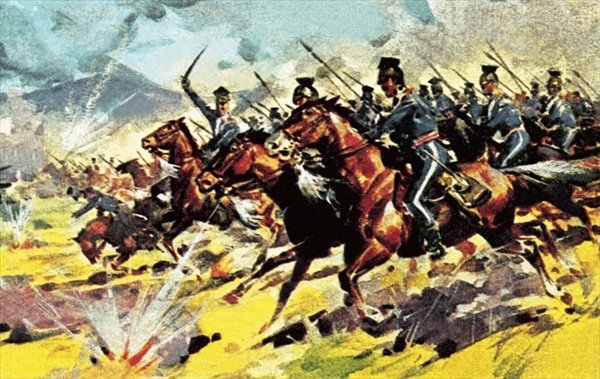
Consider the Charge of the Light Brigade, a poem by Alfred Lord Tenyson, which describes an event in the Crimean War:

“Forward, the Light Brigade!”
Was there a man dismayed?
Not though the soldier knew
Someone had blundered.

Someone had, indeed, for the charge had been ordered against the wrong hill, and the Light Brigade would ride into the enemy's guns.

Theirs not to make reply,
Theirs not to reason why,
Theirs but to do and die.
Into the valley of Death
Rode the six hundred.

Missionaries may wonder at the reasons for some mission rules.  Or they may wonder why an investigator who had seemed golden, and who was so close to baptism, may suddenly change their mind.  They may wonder why another pair of missonaries, who they see fooling around instead of working, are blessed with a baptism, when they themselves are not, despite their hard work.

Missionaries would do well to remember the words of Robert E. Lee, who commanded the Army of Northern Virginia of the Confederacy, during the American Civil War:

"Duty is the sublimest word in our language.  Do your duty in all things.  You cannot do more.  You should never do less."

Questions can lead to doubts, and doubts can lead to a loss of faith. President Dieter F. Uchtdorf addressed this during the October 2013 General Conference when he said, "There are few members of the Church who, at one time or another, have not wrestled with serious or sensitive questions. One of the purposes of the Church is to nurture and cultivate the seed of faith -- even in the sometimes sandy soil of doubt and uncertainty. Faith is to hope for things which are not seen but which are true."

He went on to say, "Therefore, my dear brothers and sisters -- my dear friends -- please, first doubt your doubts before you doubt your faith. We must never allow doubt to hold us prisoner and keep us from the divine love, peace, and gifts that come through faith in the Lord Jesus Christ."

I do not believe in blind faith, or in putting aside all questions to blindly follow the leaders of the church.  One of the fundamental principles of my faith is that, like the boy Joseph Smith, I can go to my Heavenly Father in prayer to ask about things I do not understand.  But I have also learned that, just as "no" can be an answer to prayer, that God will sometimes not give me the information that I think I need.  He knows what I do not, and He knows best what I need to know and what I do not.  His ways are not my ways.

Yesterday I thought I'd seen it all
I thought I'd climbed the highest wall
But now I see that learning never ends
And all I know to do is keep on walking
'Round the bend


Singing
Why, why, why
Does it go this way
Why, why, why
And all I can say is

Somewhere down the road
There'll be answers to the questions
Somewhere down the road
Though we cannot see it now

And somewhere down the road
You will find mighty arms reaching for you
And they will hold the answers
At the end of the road


Sources:

The Charge of the Light Brigade by Alfred Lord Tenyson, accessed at: http://www.poetryfoundation.org/poem/174586

Come, Join With Us by President Dieter F. Uchtdorf, October 2013, accessed at: https://www.lds.org/general-conference/2013/10/come-join-with-us?lang=eng

Somewhere Down the Road, lyrics by Amy Grant & Wayne Kirkpatric, accessed at: http://www.metrolyrics.com/somewhere-down-the-road-lyrics-faith-hill.html


Monday, April 21, 2014

The Life Ahead: On Coming and Going


You can be the captain
I will draw the chart
Sailing into destiny
Closer to the heart

A month or so ago I drove up to Wellsville, Utah for the homecoming of my nephew, who had just returned from the Bangkok Thailand mission.  As we were having refreshments at his house after the meeting, the bishop stopped by, claiming that he forgot to present my nephew with his missionary plaque.  It turned out, however, that this was a ruse, for the bishop produced an envelope for my niece from the missionary department.  My niece started to cry as she opened the envelope and read that she had been called to the Hong Kong mission.  The bishop had conspired with my niece to surprise her parents.

This prank was recorded and my niece posted the video on YouTube:


This experience of watching my nephew return and my niece receive her call, got me thinking about coming and going -- leaving on a mission and returning home.

When I returned home my father told me about something he saw on the day I left for the MTC in Provo.  He had stopped at the door to my room just as I was getting ready to leave.  He watched as I picked up a model airplane and looked at it for a few moments.  Then I put it down and walked out of the room.  I did not remember doing this, but I suppose that I was thinking about what I was leaving behind.

A few weeks later, after getting off the plane in San Jose, California, I read a poem that dealt with the idea of leaving things behind.  The poem begins with a missionary, while flying out, thinking of his family and friends and asking himself if he wanted the life ahead or the one he was leaving behind.  The poem then jumps two years ahead to this missionary's flight home.  Now he is thinking of his companions, his mission president, and the people he taught and baptized.  Once again he asks if he wants the life ahead or the one he is leaving behind.

For me, leaving on a mission was like starting out on a great adventure.  I knew what I was leaving behind, but I could not wait to "let the journey begin."  The only hard moment I had was after boarding the plane to fly out, for it was then that it hit me that I would not see my family and friends for two years, and I had a hard time holding back the tears.

I found coming home to be much more difficult.  I loved my mission and I did not want to leave it.  Had they asked me to stay for another six months I would have leaped at the chance.  I first asked my mission president for an extension when I had been out only nine or ten months.  At the same time, the last few months were difficult as I often felt that I was being pulled in two different directions.  The end of my mission was fast approaching, and I was looking for the brake pedal.  Yet at the same time, I had thoughts of home, of seeing family and friends again.

One of the fundamental facts of life is that time marches on; we can neither stop it, nor slow it down.  The only thing we can do is make the most of every moment.  You may not realize it, on that hot day, as you tract that long street, that the time will come when you will miss doing this very thing, when you would give almost anything to do it again.  The times I look back on now with nostalgia were those times when my companions and I were working hard, even as appointments canceled on us left and right.

Returning home meant another new beginning, the start of the next adventure.  It meant finding a job and picking a college to attend.  It meant entering the dating scene and looking for the girl I would marry.

I can remember the day I flew home, how I looked out the window and watched the Monterey Peninsula recede into the distance -- Monterey, where I had my first two baptisms, and where my companion and I worked so hard, yet experienced so much adversity as so many appointments stood us up.  The next thing I knew I was looking out the window at the snow covered Wasatch mountains.

After the plane landed, I waited with another missionary until we were the last to get off.  We paused to shake hands and then turned to find our families in the terminal.  I hugged my famiy and said hello, they took me to lunch, and then home where I opened a few Christmas presents, even though it was mid Jaunary.  And then, for the first time in two years, I was alone.  Instead of thinking about what streets in Watsonville my companion and I were going to tract the next day, I had to think of other things to do.  I am sure I started reading my first non-church related book in two years.

But there was one last challenge from my mission to face: my homecoming meeting.  I looked forward to seeing my friends, and I wanted them to see how I had changed, but only one friend was able to attend.  I had my talk all prepared, and I had a lot to say, but the two youth speakers and the ward choir took the first 25 minutes, leaving me but 13.  I thought about getting up, bearing a short testimony and sitting down, but it occured to me that this was the only homecoming meeting I was going to get.  So I started praying for inspiration and, as a result, I probably gave the best talk I have ever given -- going 4 minutes over time.

Some return missionaries may be surprised to find that
there is still much to learn, that there is still a strait and narrow path to walk and much more yet to be endured.  There will be challenges in college, at work, in marriage, and in other endeavors in life.

No matter how much adversity one has experienced, or how much one has learned, they are still human and will continue to fall short of perfection because of their weaknesses and inadequacies.  The good news is that the Atonement is there for them, even if their failings are not great sins.  There will always be the the opportunity to humble ourselves and have faith in Christ and to be lifted by His grace.

"Wherefore, ye must press forward with a steadfastness in Christ, having a perfect brightness of hope, and a love of God and of all men. Wherefore, if ye shall press forward, feasting upon the word of Christ, and endure to the end, behold, thus saith the Father: Ye shall have eternal life" (2 Nephi 31:20).