Tuesday, April 16, 2013

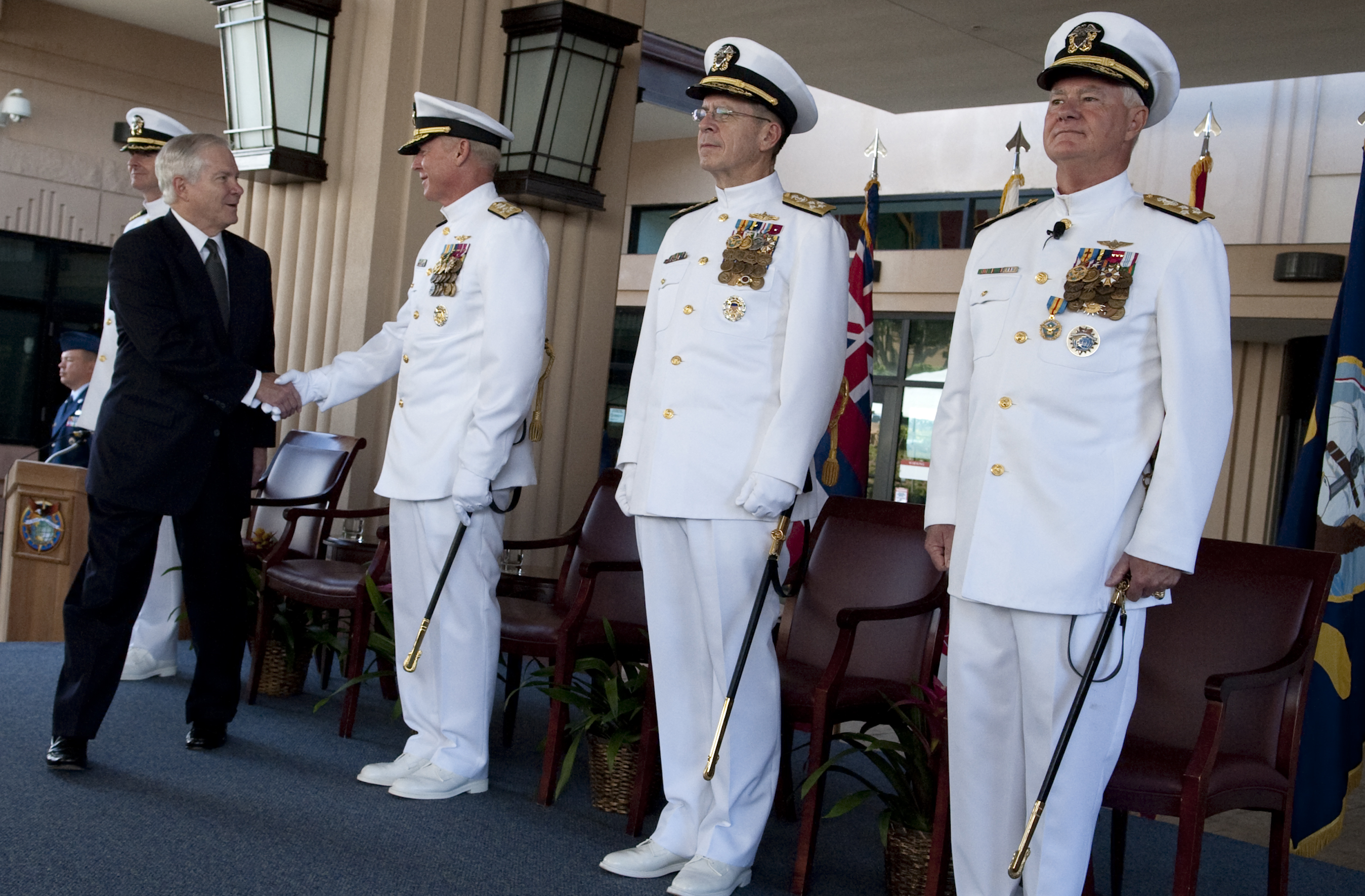
Wings of Gold on Navy Whites

I wrote the following in my journal at the end of my first week in the Missionary Training Center: "You know that little black tag I wear? To me it is like a Naval Aviator’s wings of gold. That tag is [are?] my wings of gold. It’s an honor to me that I can wear it, that I can be a missionary in the service of my Heavenly Father, and I wear it proudly. Just think, I can be instrument in the Lord’s hands. Wow!"

A few years earlier I had found an interest in the history of the Second World War, and perhaps the aspect that interested me the most were the aircraft carriers fighting in the Pacific Theater.  My Walter Mitty fantasies during my high school years involved me flying fighter planes off of the USS Enterprise (CV-6). I gave serious thought to joining the Navy out of high school but eventually decided that going on a mission was what the Lord wanted me to do.  In any case, the modern Navy wasn't really the same as the Navy of World War II -- also, I didn't have the eyesight to become a naval aviator anyway.

At the end of the pilot episode of the television series JAG, one of the characters says something about Wings of Gold on Navy Whites.  For a different reason, probably, I have to agree that there is something impressive about a naval aviator in dress whites.  During the warmer months in some areas missionaries shed their suit coats and put their name tags on the pocket of their white shirts.  Again, there's just something impressive about missionaries in white shirts and ties -- at least when their not wearing helmets and riding bicycles.

The greatest day(s) for a missionary is when he puts on his baptismal whites and leads an investigator down into the water.  I was five months out and in my second area when I first had the opportunity to do this.  Before the ceremony I stood with my companion and our investigator out in the parking lot and had photos taken.  White represents cleanliness.

While serving his mission in the Hawaiian Islands, Joseph F. Smith had a dream about cleanliness, which President Gordan B. Hinckley talked about during the April 2007 General Conference of the Church of Jesus Christ of Latter-day Saints.

"Hawaii was not a tourist center then," said President Hinckley. "It was populated by the native Hawaiians, who were, for the most part, poor but generous with what they had. He learned to speak their language and to love them."  Then he quoted President Smith as he told about his "remarkable dream":

“I was very much oppressed [when I was] on a mission. I was almost naked and entirely friendless, except [for] the friendship of a poor, benighted … people. I felt as if I was so debased in my condition of poverty, lack of intelligence and knowledge, just a boy, that I hardly dared look a … man in the face.

“While in that condition I dreamed [one night] that I was on a journey, and I was impressed that I ought to hurry—hurry with all my might, for fear I might be too late. I rushed on my way as fast as I possibly could, and I was only conscious of having just a little bundle, a handkerchief with a small bundle wrapped in it. I did not realize … what it was, when I was hurrying as fast as I could; but finally I came to a wonderful mansion. … I thought I knew that was my destination. As I passed towards it, as fast as I could, I saw a notice [which read B-A-T-H], ‘Bath.’ I turned aside quickly and went into the bath and washed myself clean. I opened up this little bundle that I had, and there was [some] white, clean [clothing], a thing I had not seen for a long time, because the people I was with did not think very much of making things exceedingly clean. But my [clothing was] clean, and I put [it] on. Then I rushed to what appeared to be a great opening, or door. I knocked and the door opened, and the man who stood there was the Prophet Joseph Smith. He looked at me a little reprovingly, and the first words he said: ‘Joseph, you are late.’ Yet I took confidence and [replied]:

“‘Yes, but I am clean—I am clean!’

“He clasped my hand and drew me in, then closed the great door. I felt his hand just as tangible as I ever felt the hand of man. I knew him, and when I entered I saw my father, and Brigham [Young] and Heber [C. Kimball], and Willard [Richards], and other good men that I had known, standing in a row. I looked as if it were across this valley, and it seemed to be filled with a vast multitude of people, but on the stage were all the people that I had known. My mother was there, and she sat with a child in her lap; and I could name over as many as I remember of their names, who sat there, who seemed to be among the chosen, among the exalted. …

“[When I had this dream,] I was alone on a mat, away up in the mountains of Hawaii—no one was with me. But in this vision I pressed my hand up against the Prophet, and I saw a smile cross his countenance. …

“When I awoke that morning I was a man, although only [still] a boy. There was not anything in the world that I feared [after that]. I could meet any man or woman or child and look them in the face, feeling in my soul that I was a man every whit. That vision, that manifestation and witness that I enjoyed at that time has made me what I am, if I am anything that is good, or clean, or upright before the Lord, if there is anything good in me. That has helped me out in every trial and through every difficulty”

"The core of that meaningful dream," said President Hinckley, "is found in the reproof given by Joseph Smith to young Joseph F. Said the Prophet, 'Joseph, you are late.'  Replied Joseph F., 'Yes, but I am clean—I am clean!'  The result of that dream was that a boy was changed into a man. His declaration “I am clean” gave him self-assurance and courage in facing anyone or any situation."

Before departing on a mission, elders and sisters must first go through the temple and receive their Endowment.  To enter the temple they must be clean, and in the temple they wear white clothing to represent their being clean.  Elders again wear white when they lead investigators into the waters of baptism.  Missionaries must stay clean as they serve the Lord.  If missionaries stay clean they can have the self-assurance and courage to face anyone or any situation.


Source:

Hinckley, G. B. (2007) "I Am Clean". Conference Report, April 2007.  Accessed at https://www.lds.org/general-conference/2007/04/i-am-clean?lang=eng on April 16, 2013.


Tuesday, April 9, 2013

"We Will Stand By You"

The heavy cruiser USS Houston (CA-30) went down in the Sunda Strait, between the islands of Java and Sumatra, in the early morning hours of March 1, 1942, after a desperate fight with Japanese surface ships.  Her fate was not immediately known in the United States and she was listed as "Overdue, presumed lost."

The city of Houston, Texas honored the lost cruiser by raising enough money to build two new ships, a light cruiser and a light aircraft carrier.  On October 12, 1942 the Cleveland class cruiser Vicksburg, then under construction, had her name changed to Houston.  That same month another ship was laid down, the light cruiser Newark (CL-100), but by this point in the war it was clear that the U.S. Navy would need more aircraft carriers, and as quickly as possible.  Newark was designated for conversion as a light carrier and given the name Reprisal (CVL-30), however, to honor the city of Houston the ship's name was changed again to San Jacinto after the battle of that name which was fought during the Texas Revolution.  Future U.S. President George H. W. Bush would serve as a pilot aboard San Jacinto during World War II.

The light cruiser Houston was launched on June 19, 1943 and commissioned on December 20 of that same year.  Houston arrived in Pearl Harbor, Hawaii, via the Panama Canal, in May 1944 and subsequently participated in the campaigns to capture Saipan, Tinian and Guam in the Mariana Islands and Peleliu in the Palau Islands.  In October she sailed with the carriers of Task Force 38 in support of air operations against the island of Formosa (Taiwan), in preparation for General MacArthur's return to the Philippines later that month.

The first day of the operation, October 12, saw heavy fighting in the air, and the Japanese suffered devastating losses in airplanes shot down and destroyed on the ground.  That night the Japanese retaliated with air strikes against the American fleet.  Houston shot down four enemy planes, but the heavy cruiser USS Canberra (CA-70) was hit by an aerial torpedo.  Houston took over Canberra's station in the screen and two days later there was another air attack.  This time Houston shot down three planes, but the fourth was able to drop its torpedo, which then hit the light cruiser.

The battle began to save Houston, which joined Canberra in what Third Fleet commander Admiral William F. Halsey called "Cripple Division 1."  Houston was first taken under tow by the heavy cruiser USS Boston (CA-69), and was later relieved by the fleet tug USS Pawnee (ATF-74).  The crew of the light cruiser knew that a heroic fight would be required to save their ship.


Late on the afternoon of October 16, Houston and Canberra were again attacked by Japanese airplanes.  Houston was hit by another torpedo, this time on her stern; the hit flooded her scout plane hanger.

As a relatively small ship, one torpedo hit was often enough to sink a light cruiser, now Houston had taken a second hit which should have been fatal.  Captain William W. Behrens knew that an even greater effort would be required to save his ship and he wondered if it should even be tried.  Even if he could get his ship back to a shipyard in the United States, the ship might not be salvageable.  Any repair effort might take months and the time and money might be better spent on a new ship.

The crew was tired after the fight to save Houston from the first torpedo.  Did they have anything left with which to continue the fight?  The crew also wondered if the ships screening them in these hostile waters would not now leave them.  Was Houston a lost cause?  Doubt and fatigue led to depression.

As captain and crew considered the fate of their ship, they received a message flashed from Pawnee:


WE WILL STAND BY YOU.

It was a simple message, yet it filled the crew of Houston with strength and courage.  It gave them enough hope to continue their heroic fight to save their ship.

Captain Behrens continued to wonder if the effort to save the light cruiser was worth it.  Despite his doubts, however, the crew was able to keep Houston afloat and she arrived in the Pacific Fleet's new forward base at Ulithi, in the Western Caroline Islands, on October 27, seven days after MacArthur's landing on the island of Leyte, in the central Philippines.  After temporary repairs Houston sailed on to Manus in the Admiralty Islands, where she underwent more repairs in a floating dry dock after arriving on December 20.

After a stopover in Hawaii, Houston continued on to the New York Navy Yard, arriving on March 24, 1945.  After extensive work, the light cruiser sailed out of New York Harbor on October 11, 1945, more than a month after the war had ended.  Captain Behrens would continue to doubt whether the efforts to save Houston were worthwhile.  After two years of productive peacetime service, Houston was decommissioned in December 1947.

The message sent by the fleet tug Pawnee has long been remembered by Houston's crew and by the U.S. Navy.

WE WILL STAND BY YOU.


At the Waters of Mormon, Alma the elder spoke to those who had come to be baptized, saying, "As ye are desirous to come into the fold of God, and to be called his people, and are willing to bear one another's burdens, that they may be light; Yeah, and are willing to mourn with those that mourn; yea, and comfort those that stand in need of comfort" (Mosiah 18:8-9).

It is often the little things we do that can give comfort to those that stand in need of comfort.  Sometimes it can be as simple as letting them know that they are not alone and that

WE WILL STAND BY YOU.


Sources:

http://en.wikipedia.org/wiki/USS_Houston_%28CL-81%29

http://en.wikipedia.org/w...San_Jacinto_%28CVL-30%29

Hyams, J. (1991). Flight of the Avenger: George Bush at War.  Boston: Houghton Mifflin Harcourt Publishing.

Miller, J. G. (1985). The Battle to Save the Houston, October 1944 to March 1945.  Annapolis: Naval Institute Press.


Monday, April 8, 2013

Principle Before Passion

An article in a recent issue of the U.S. Naval Institute's periodical Proceedings, referenced the move The Karate Kid (the 1984 original), in which a reluctant martial arts sensei, played by the late Pat Morita, teaches an eager student, played by Ralph Macchio.  Mister Miyagi uses some unconventional methods to teach Daniel LaRusso, including the repetitive polishing motion "wax on, wax off."  Though Daniel thought he was performing menial tasks, Miyagi was teaching him a valuable combat skill, which Daniel comes to understand only after expressing his frustration at having spent several days waxing a car, sanding a deck and staining a fence.

The author of the Proceedings article makes the point that "Many military situations require such immediate and refined responses, and repetition builds those skills."  Repetition has been called the soul of all learning.  Zig Ziglar said that a person needs to hear something seven times before they really understand it.  There is certainly some repetition involved in missionary work such as daily scripture study, knocking on doors and praying multiple times a day.

"Yet we need critical thinkers, sailors, Marines, and guardians who aren't always robotic," writes the author.  Neither are missionaries to be automatons.  Daily scripture study is important because one must learn God's word before they can teach His word.  Though there may be some common answers to common concerns, there are also situations where a missionary must rely on the Spirit to bring to their rembrance something they have previously learned.  Missionary work is not a paint by numbers project, often the unexpected can happen.

Miyagi told Daniel on multiple occasions in The Karate Kid that "Not everything is as seem."  He was encouraging his student to search for the purpose behind the task, to think critically by suggesting there might be a hidden meaning in each seemingly pointless experience.

Miyagi had some more lessons to impart to Daniel in the sequel The Karate Kid Part II (1986), when the pair visited the island of Okinawa.  The teacher explained to the student that he left Okinawa to avoid a fight with a rival whose parents had arranged a marriage to the woman Miyagi loved.  Daniel could not understand why Miyagi, who was the better fighter, allowed himself to be viewed as a coward.  "Never put passion before principle," answered Miyagi.  Facing the challenge of his rival would have forced him to violate his principles, and for Miyagi this would be worse than being considered a coward.

As Miyagi put it, "Even if win, you lose," when you violate your own principles.

The author of the Proceeding's article noted that these lessons are relevant in the Sea Services, and "we have countless examples of when they are ignored.  Too many leaders have been relieved for cause after putting passion before principle.  Whether that passion is power, greed, status, sex, or money, placing them before principles causes the loss of honor -- even when you get away with it.  Rewards won through passion are temporary, but principles are everlasting."

Which is what Miyagi taught Daniel when he said, "In Okinawa, honor have no time limit."

Missionaries may be tempted to think that some of the rules are pointless, or perhaps their passion will lead them to break the rules.  Missionaries may break the rules and get away with it, or they may not, either way they lose.  Though repentance is possible, regaining lost honor and integrity is not easy.  

Personal development, for a missionary or a sailor, includes lessons about core values, "and examples exist in unexpected places," writes the author.  "These movies showed how honor results from having the courage to maintain commitment to one's values, never putting passion before principle."

Make the commitment now to live the mission rules, to keep the commandments, and to work hard -- to give it everything you've got "every hour, every day, every minute, all the way" (Elder Jeffrey R. Holland address at MTC, August 24, 2010).  Exercise courage when that commitment is challenged, as challenged it will be, so that you may return home with honor.  Think critically and look for hidden meanings or purposes behind each seemingly pointless rule or experience.  When the day of trial comes, put principle before passion.


Source:

Murphy. J. (2013). "From the Deckplates: Principle Before Passion." Proceedings, Vol. 139/2.


Tuesday, March 19, 2013

The Faith to Climb Mountains


President Henry B. Eyring had this to say during the April 2012 General Conference:

"Many of you are now passing through physical, mental, and emotional trials that could cause you to cry out, 'When I have tried all my life to be good, why has this happened to me?”'

"You know how the Lord answered that question for the Prophet Joseph Smith in his prison cell:

"'And if thou shouldst be cast into the pit, or into the hands of murderers, and the sentence of death passed upon thee; if thou be cast into the deep; if the billowing surge conspire against thee; if fierce winds become thine enemy; if the heavens gather blackness, and all the elements combine to hedge up the way; and above all, if the very jaws of hell shall gape open the mouth wide after thee, know thou, my son, that all these things shall give thee experience, and shall be for thy good. 

“'The Son of Man hath descended below them all. Art thou greater than he?

“'Therefore, hold on thy way, and the priesthood shall remain with thee; for their bounds are set, they cannot pass. Thy days are known, and thy years shall not be numbered less; therefore, fear not what man can do, for God shall be with you forever and ever.'

"There seems to me no better answer to the question of why trials come and what we are to do than the words of the Lord Himself, who passed through trials for us more terrible than we can imagine.

"You and I have faith that the way to rise through and above trials is to believe that there is a 'balm in Gilead' and that the Lord has promised, 'I will not … forsake thee.'  That is what President Thomas S. Monson has taught us to help us and those we serve in what seem lonely and overwhelming trials.

"But President Monson has also wisely taught that a foundation of faith in the reality of those promises takes time to build. You may have seen the need for that foundation, as I have, at the bedside of someone ready to give up the fight to endure to the end. If the foundation of faith is not embedded in our hearts, the power to endure will crumble.

"Now, I wish to encourage those who are in the midst of hard trials, who feel their faith may be fading under the onslaught of troubles. Trouble itself can be your way to strengthen and finally gain unshakable faith. Moroni, the son of Mormon in the Book of Mormon, told us how that blessing could come to pass. He teaches the simple and sweet truth that acting on even a twig of faith allows God to grow it

"That particle of faith most precious and which you should protect and use to whatever extent you can is faith in the Lord Jesus Christ. Moroni taught the power of that faith this way: 'And neither at any time hath any wrought miracles until after their faith; wherefore they first believed in the Son of God.'

"If we have faith in Jesus Christ, the hardest as well as the easiest times in life can be a blessing. In all conditions, we can choose the right with the guidance of the Spirit. We have the gospel of Jesus Christ to shape and guide our lives if we choose it. And with prophets revealing to us our place in the plan of salvation, we can live with perfect hope and a feeling of peace. We never need to feel that we are alone or unloved in the Lord’s service because we never are. We can feel the love of God. The Savior has promised angels on our left and our right to bear us up. And He always keeps His word."

Source:

Eyring, H. B. (2012) "Mountains to Climb". Conference Report, April 2012.  Accessed at  http://www.lds.org/general-conference/2012/04/mountains-to-climb?lang=eng March 19, 2013.

Watch full address here:


Monday, February 25, 2013

Video: On The Lord's Errand -- The Life of Thomas S. Monson

"No one can understand President Thomas S. Monson," said Elder Jeffrey R. Holland, "who does not understand the frequency, the repetition of those kinds of spiritual promptings in his life, and his absolute loyalty in responding to them."

I can think of no better modern day example of how to serve the Lord by serving his fellow men and women than that of President Monson.


Friday, February 22, 2013

Balancing Truth and Tolerance -- A Talk by Elder Dalin H. Oaks

"The existence and nature of truth is one of the fundamental questions of mortal life. Jesus told the Roman governor Pilate that He came into the world to 'bear witness unto the truth.' That unbeliever responded, 'What is truth?' (John 18:37–38). Earlier the Savior had declared, 'I am the way, the truth, and the life' (John 14:6). In modern revelation, He declared, 'Truth is knowledge of things as they are, and as they were, and as they are to come' (D&C 93:24).

"We believe in absolute truth, including the existence of God and the right and wrong established by His commandments. We know that the existence of God and the existence of absolute truth are fundamental to life on this earth, whether they are believed in or not. We also know that evil exists and that some things are simply, seriously, and everlastingly wrong."


Read the rest at:

https://www.lds.org/liahona/2013/02/balancing-truth-and-tolerance?lang=eng

Thursday, February 21, 2013

Video: Together Forever

I first watched this video at a baptismal ceremony in June 1988.  My reaction was "Wow, what a great video."  Together Forever was the third of three great videos released by the church around the time of my mission.  It wasn't long before I wrote home recommending that my family find and watch this excellent video.