I can think of no better modern day example of how to serve the Lord by serving his fellow men and women than that of President Monson.
Monday, February 25, 2013
Video: On The Lord's Errand -- The Life of Thomas S. Monson
"No one can understand President Thomas S. Monson," said Elder Jeffrey R. Holland, "who does not understand the frequency, the repetition of those kinds of spiritual promptings in his life, and his absolute loyalty in responding to them."
I can think of no better modern day example of how to serve the Lord by serving his fellow men and women than that of President Monson.
I can think of no better modern day example of how to serve the Lord by serving his fellow men and women than that of President Monson.

Friday, February 22, 2013
Balancing Truth and Tolerance -- A Talk by Elder Dalin H. Oaks

"We believe in absolute truth, including the existence of God and the right and wrong established by His commandments. We know that the existence of God and the existence of absolute truth are fundamental to life on this earth, whether they are believed in or not. We also know that evil exists and that some things are simply, seriously, and everlastingly wrong."
Read the rest at:
https://www.lds.org/liahona/2013/02/balancing-truth-and-tolerance?lang=eng
Thursday, February 21, 2013
Video: Together Forever
I first watched this video at a baptismal ceremony in June 1988. My reaction was "Wow, what a great video." Together Forever was the third of three great videos released by the church around the time of my mission. It wasn't long before I wrote home recommending that my family find and watch this excellent video.
Wednesday, February 20, 2013
Video: How Rare a Posession
"I speak unto you as if ye were present, and yet ye are not. But behold, Jesus Christ hath shown you unto me, and I know your doing."
This video was released by the church in November 1987, just two months before I left on my mission. It is, quite simply, fantastic. I loved showing this video to investigators, as well as to members. Watching this video always invited the Spirit, and it was often strong and sweet. This video, which we called H-RAP for short, was one of our best tools.
This video was released by the church in November 1987, just two months before I left on my mission. It is, quite simply, fantastic. I loved showing this video to investigators, as well as to members. Watching this video always invited the Spirit, and it was often strong and sweet. This video, which we called H-RAP for short, was one of our best tools.
Tuesday, February 19, 2013
Video: Our Heavenly Father's Plan
This video was released by the church in 1986, a couple of years before I left on my mission. The video basically corresponded to the 1st discussion that missionaries of my era taught. Learn it, live it, love it.
Tuesday, February 12, 2013
The Book of Mormon: Fruit of Joseph Smith and the Keystone of Our Religion

The Savior continued, "A good tree cannot bring for evil fruit, neither can a corrupt tree bring forth good fruit. Every tree that bringeth not forth good fruit is hewn down and cast into the fire. Wherefore by their fruits ye shall know them." (Matthew 7: 16-20)
We believe that Joseph Smith was a prophet of God. How shall we know that he is a prophet? By his fruits. The most important fruit of Joseph Smith is the Book of Mormon. In the Book of Mormon, the prophet Mormon expounded on the principle that "by their works ye shall know them" using the contrast of good and bitter fountains. "For behold, a bitter fountain cannot bring forth good water; neither can a good fountain bring forth bitter water; wherefore, a man being a servant of the devil cannot follow Christ; and if he follow Christ he cannot be a servant of the devil."
Mormon continued, "Wherefore, all things which are good cometh of God; and that which is evil cometh of the devil; for the devil is an enemy unto God, and fighteth against him continually, and inviteth and enticeth to sin, and to do that which is evil continually. But behold, that which is of God inviteth and enticeth to good continually; wherefore, every thing which inviteth and enticeth to do good, and to love God, and to serve him, is inspired of God." (Moroni 7: 11-13)
The first thing to consider, either as prospective missionaries first read the Book of Mormon, or as their future investigators read it, is does the Book of Mormon invite and entice its readers to do good, to love God, and to serve him?
Early in the book, we read that the "right way" is to believe in Christ. Nephi, the first man to keep the record that would become the Book of Mormon, wrote, "I say unto you that the right way is to believe in Christ, and deny him not; and Christ is the Holy One of Israel' wherefore ye must bow down before him, and worship him with all your might, mind, and strength, and your whole soul; and if ye do this ye shall in nowise be cast out." (2 Nephi 25:29)
Nephi would later write, "And now, my beloved brethren . . . hearken unto these words and believe in Christ; and if ye believe not in these words believe in Christ. And if ye shall believe in Christ ye will believe in these words, for they are the words of Christ, and he hath given them unto me; and they teach all men that they should do good." (2 Nephi 33:10)
The second thing to consider is the promise given by Moroni, the last record keeper of the Book of Mormon. Moroni promised that if we ask God in the name of Jesus Christ, with a sincere heart, real intent, having faith in Christ, if "these things", the Book of Mormon, are not true, that God will manifest the truth of it unto us by the power of the Holy Ghost. "And by the power of the Holy Ghost," he said, "ye may know the truth of all things."
The prophet Joseph Smith was called by God to translate the Book of Mormon by the gift and power of God. God commanded Nephi and Mormon and Moroni to keep a record and to write the words of God. It is God, then, who gave us the Book of Mormon; Joseph Smith was his instrument in bringing forth the book in our day. Because Joseph was God's instrument, the Book of Mormon is considered to be a fruit of his labor. If the Book of Mormon persuades men to do good and to believe in Christ, and if it is the word of God, then Joseph Smith is a prophet of God.
President Gordon B. Hinckley said, "If the Book of Mormon is true, the Church is true, for the same authority under which this sacred record came to light is present and manifest among us today. It is a restoration of the Church set up by the Savior in Palestine. It is a restoration of the Church set up by the Savior when he visited this continent as set forth in this sacred record."
President Hinckley went on to say that, "If the Book of Mormon is true, the Bible is true. The Bible is the Testament of the Old World. The Book of Mormon is the Testament of the New. The one is the record of Judah, the other is the record of Joseph, and they have come together in hand of of the Lord in fulfillment of the prophecy of Ezekiel. Together they declare the Kingship of the Redeemer of the word, and the reality of his kingdom."
President Ezra Taft Benson called the Book of Mormon the "keystone of our religion," the "keystone of testimony," and said "Just as the arch crumbles if the keystone is removed, so does all the Church stand or fall with the truthfulness of the Book of Mormon." President Benson also counseled us to use the Book of Mormon in handling objections to the church:
"All objections, whether they be on abortion, plural marriage, seventh-day worship, etc., basically hinge on whether Joseph Smith and his successors were and are prophets of God receiving divine revelation. Here, then, is a procedure to handle most objection through the use of the Book of Mormon.
"First, understand the objection.
"Second, give the answer from revelation.
"Third, show how the correctness of the answer really depends on whether or not we have modern revelation through modern prophets.
"Fourth, explain that whether or not we have modern prophets and revelation really depends on whether the Book of Mormon is true.
"Therefore, the only problem the objector has to resolve for himself is whether the Book of Mormon is true. For if the Book of Mormon is true, then Jesus is the Christ, Joseph Smith was his prophet, The Church of Jesus Christ of Latter-day Saints is true, and it is being led to day by a prophet receiving revelation. Our main task is to declare the gospel and do it effectively. We are not obliged to answer every objection. Every man eventually is backed up to the wall of faith, and there he must make his stand."
Finally, Elder Richard G. Scott gave counsel that prospective missionaries can follow and then share with their investigators in the mission field: "Try reading the Book of Mormon because you want to, not because you have to. Discover for yourself that it is true. As you read each page, ask 'Could any man have written this book, or did it come as Joseph Smith testified?' Apply the teachings you learn. They will fortify you against the evil of Satan.
"Follow Moroni's counsel. Sincerely ask God the Father, in the name of Jesus Christ, with real intent, if the teachings of the Book of Mormon are true. Ask with a desire to receive a confirmation that the book is true. You will then know that Jesus Christ lives, that Joseph Smith was and is a prophet, and that the Church of Jesus Christ of Latter-day Saints is the Lord's Church. You will confirm that the Savior guides His Church through a living prophet. These truths will become a foundation for your productive life."
Benson, E. T. (1988). A Witness and a Warning: A Modern-Day Prophet Testifies of the Book of Mormon. Salt Lake City: Deseret Book.
Hinckley, G. B. (1959). Conference Report, October 1959.
Scott, R. G. (2003). Conference Report, October 2003.
Thursday, February 7, 2013
Recognizing the Promptings of the Spirit
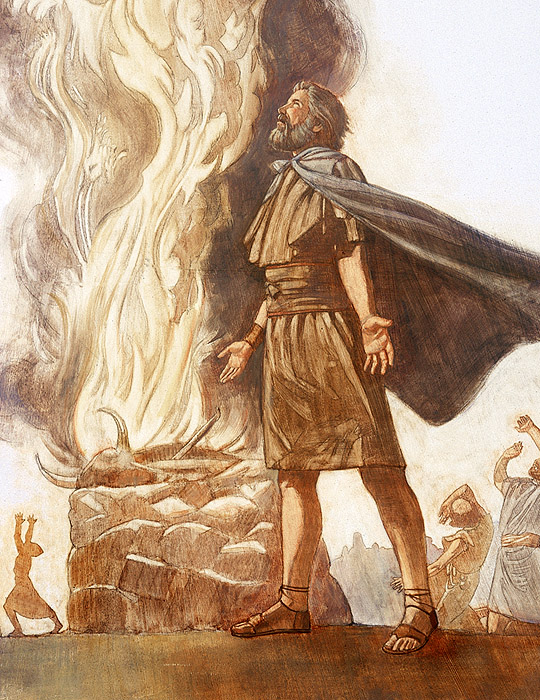
"The Spirit does not get our attention by shouting or shaking us with a heavy hand. Rather it whispers. It caresses so gently that if we are preoccupied we may not feel it at all. Occasionally it will press just firmly enough for us to pay heed. But most of the time, if we do not heed the gentle feeling, the Spirit will withdraw and wait until we come seeking and listening and say in our manner and expression, like Samuel of ancient times, 'Speak [Lord], for they servant heareth.'"
Promptings of the Spirit have often been described as a "burning in the bosom," yet Elder Dalin H. Oaks had this to say: "What does a 'burning in the bosom' mean? Does it need to be a feeling of caloric heat, like the burning produced by combustion? If that is the meaning, I have never had a burning in the bosom. Surely, the word 'burning' in this scripture signifies a feeling of comfort and serenity. That is the witness many receive. That is the way revelation works."
How do we recognize the promptings of the spirit? To answer the question, President Gordon B. Hinckley once read Moroni 7:13, 16-17 and then said, "That's the test, when all is said and done. Does it persuade one to do good, to rise, to stand tall, to do the right thing, to be kind, to be generous? Then it is of the Spirit of God. . . . If it invites to do good, it is of God. If it inviteth to do evil, it is of the devil. . . . And if you are doing the right thing and if you are living the right way, you will know in your heart what the Spirit is saying to you."
President Hinckley added that, "You recognize the promptings of the Spirit by the fruits of the Spirit -- that which enlighteneth, that which buildeth up, that which is positive and affirmative and uplifting and leads us to better thoughts and better words and better deeds is of the Spirit of God."
In chapter 4 of Preach My Gospel, we find a table with a list of scriptures which gives ideas on how one might recognize the Spirit and its promptings (pages 96-97). For example scriptures such as Galatians 5:22-23 suggest that the Spirit gives "feelings of love, joy, peace, patience, meekness, gentleness, faith and hope." Doctrine and Covenants 8:2-3 says that the Spirit can give us ideas in the mind and feelings in the heart. The spirit can enlighten the mind, according to Alma 32:28 and other scriptures. The table is worth studying so that prospective missionaries can learn to recognize the Spirit.
President Howard W. Hunter explained how we can discern different manifestations of the Spirit: "I get concerned when it appears that strong emotion or free-flowing tears are equated with the presence of the Spirit. Certainly the Spirit of the Lord can bring strong emotional feelings, including tears, but that outward manifestation ought not to be confused with the presence of the Spirit itself.
"I have watched a great many of my brethren over the years and we have shared some rare and unspeakable spiritual experiences together. Those experiences have all been different, each special in its own way, and such sacred moments may or may not be accompanied by tears. Very often they are, but sometimes they are accompanied by total silence. Other times they are accompanied by joy. Always they are accompanied by a great manifestation of the truth, of revelation to the heart. . . .
"Listen for the truth, hearken to the doctrine, and let the manifestation of the Spirit come as it may in all of its many and varied forms. Stay with solid principles; teach from a pure heart. The the Spirit will penetrate your mind and heart and every mind and heart of your students."
Not only can there be difference manifestations of the Spirit for different situations, but also for different people. The way the Spirit manifests itself to one person is often different from how the Spirit manifests itself to another. We are all individuals and the way the Spirit manifests itself to us may be unique. We should learn not just to recognize the Spirit, but also how it manifests itself to us individually and uniquely.
Sources:
Missionary Preparation: Student Manual. (2005). Salt Lake City:The Church of Jesus Christ of Latter-day Saints
Preach My Gospel. (2004). Salt Lake City: The Church of Jesus Christ of Latter-day Saints.
Teaching, No Greater Call: A Resource Guide for Gospel Teaching. (1999). Salt Lake City: The Church of Jesus Christ of Latter-day Saints.
Subscribe to:
Posts (Atom)